

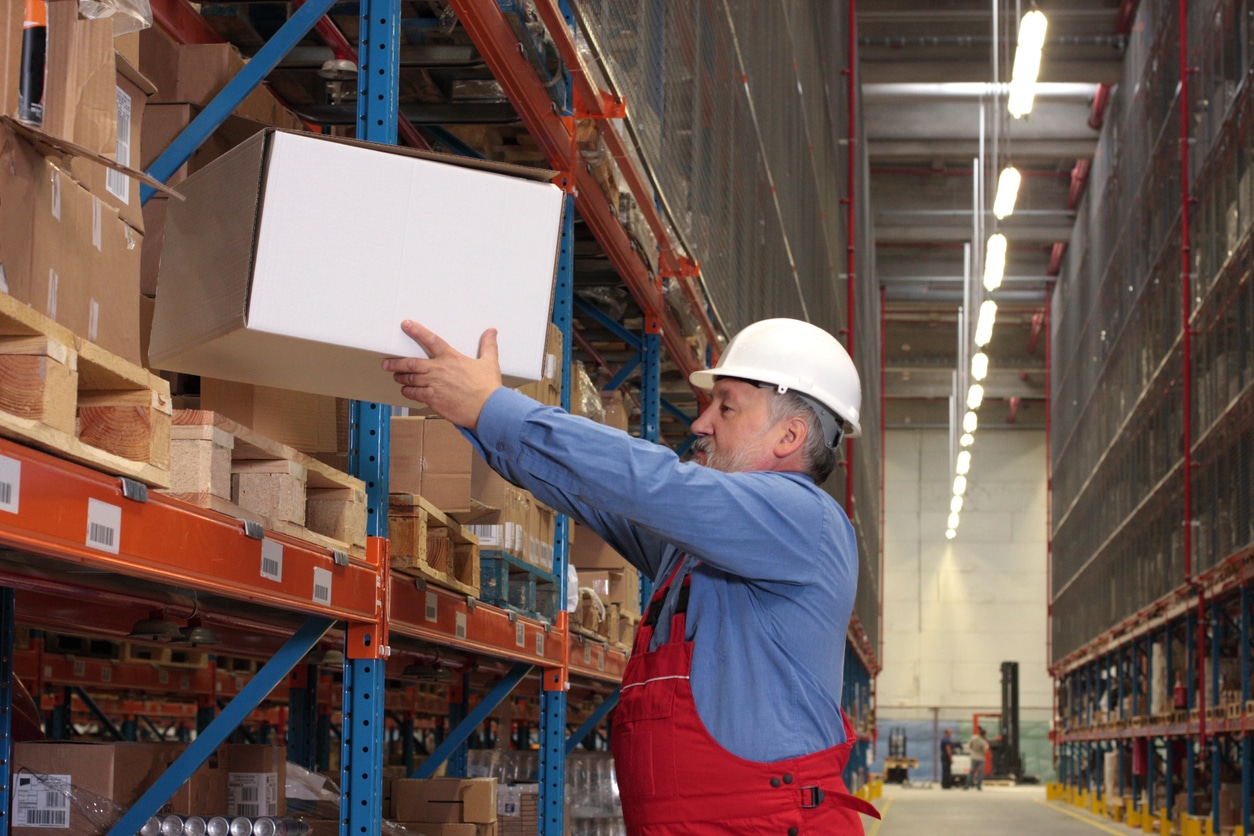
Manual handling injuries are the second most common workplace injury in the UK, so health and safety should be of the utmost importance for employers in this sector.
Many factors can affect how safe a manual handling activity is; and we’ve previously shared lifting tips for both employers and employees to help make manual handling tasks safer.
One of these tips is to ensure you are not lifting more than the recommended maximum weight. But, how much weight can the average person carry in kgs? We answer this question and more below.
What Is The Max Manual Handling Weight Limit?
When it comes to lifting weights at work, there is no legal limit. This is because manual handling injuries can occur regardless of the weight of the item you’re lifting, especially if your technique is poor.
Ultimately, an employer is responsible for determining, managing and controlling the risks associated with manual handling and weight limits. While there is no legal maximum weight limit, there are recommendations and guidelines for safe limits for both men and women.
Manual Handling Weight Limits For Men
For men, the maximum safe lifting weight is 25kg. However, this guideline depends on the height at which the object is being lifted and the manner in which it is carried. Below are some more specifics:
|
Height at which object is lifted |
Max weight when held close to body |
Max weight when held at arm’s length |
|
Head Height |
10kg |
5kg |
|
Shoulder Height |
20kg |
10kg |
|
Elbow Height |
25kg |
15kg |
|
Knuckle Height |
20kg |
10kg |
|
Mid-Lower Leg Height |
10kg |
5kg |
Manual Handling Weight Limits For Women
So if men can lift up to 25kgs, what are the safe lifting limits for women at work? The maximum recommended weight for women is 16kg, but as with men, this guideline will depend on the height at which the object is being lifted and how it is carried. Safe manual handling procedures must always be followed. Here is some more information:
|
Height at which object is lifted |
Max weight when held close to body |
Max weight when held at arm’s length |
|
Head Height |
7kg |
3kg |
|
Shoulder Height |
13kg |
7kg |
|
Elbow Height |
16kg |
10kg |
|
Knuckle Height |
13kg |
7kg |
|
Mid-Lower Leg Height |
7kg |
3kg |
Individual Capacity for Handling Weights
While the above health and safety advice gives us a good broad understanding of weight limits, it’s important to keep the following in mind, too:
- Considering individual capability (including young workers, new starters, pregnant workers, and those returning from injury)
- Assessing repetitive strain and cumulative load, not just single lifts
- Reviewing tasks where mechanical aids could reasonably be introduced
- Ensuring dynamic risk assessments are in place for changing site conditions
Manual handling injuries often develop over time, not just from one heavy lift. This is why employers are expected to move beyond weight tables and carry out task-specific risk assessments that consider the full picture – the task, the load, the environment and the individual.
Two-Person Lift Weight Limit UK
When two people lift an object, they’ll, of course, be able to handle a heavier load. However, many people make the mistake of thinking that two people can simply lift double the weight, which is not the case.
When two people are lifting an object, the general rule of thumb is not to carry more than 2/3rds of your combined capabilities. For example, if two women were lifting an object, it shouldn’t weigh more than 21kg, but for two men, it would be approximately 33kg.
If you find a third person to help with the manual handling, then the total weight should not exceed half of the sum of the three individuals’ carrying capacity. So again, for three women, this would be 24kg, whereas for three males, it would be 37.5kg.
Advice On Safe Manual Handling Weights
Having weight limits is important to ensure the health and safety of employees who need to carry out manual handling activities. However, following only these recommendations is not enough to keep employees safe.
Some things to remember and do before engaging in hazardous manual handling tasks include:
- Warming the muscles up before lifting
- Ensuring there are no obstructions in your path
- Maintain good, straight posture
- Always bend with the knees; do not bend or stoop from the upper body
- Ensure you have the necessary manual handling training
- Hold the object as close to your body as possible
- Ensure you have a good grip on the object before lifting
- Lower the object slowly to avoid hand injuries
- Assess manual handling risks before lifting the object
UK Guidance & What Employers Should Keep in Mind
While there isn’t a fixed legal maximum lifting weight in the UK, the principles set out in the Manual Handling Operations Regulations 1992 (as amended in 2002) remain the foundation of compliance.
The HSE continues to emphasise that the safe maximum lifting weights of 25kg (men) and 16kg (women) are guideline weights only, not safe limits in every circumstance. These figures are based on ideal lifting conditions, which are that:
- The load is held close to the body
- The lift takes place at around elbow height
- The movement is smooth and controlled
- The individual is fit, trained, and capable
- The environment is stable and unobstructed
If any of these conditions change – for example, twisting while lifting, reaching, lifting from the floor, working in confined spaces, repetitive handling, or carrying over distance, the safe weight is reduced to what is comfortable and safe for the individual.
Why Training and Risk Assessment Matter
Even a pretty light load can cause trouble if handled poorly. Clear procedures, practical training and well-documented assessments remain the most effective way to reduce musculoskeletal injuries, which are the second-most prevelant workplace injury in the UK.
If you’re unsure if your team is aware and well-versed in best practices, as shared by manual handling operations regulations, even a simple and straightforward online manual handling training course, professionally prepared risk assessments, and a manual handling poster can provide clarity, consistency and confidence, helping protect both your workforce and your business.