

Every year in the UK, workplace fires cause millions of pounds in property damage, disrupt operations, and most critically, put human lives at serious risk.
Under the Regulatory Reform (Fire Safety) Order 2005 (often referred to as the RRO), almost all businesses operating from commercial premises are legally required to carry out a comprehensive fire risk assessment. Failure to do so can result in severe enforcement action, invalidated commercial insurance, and criminal prosecution.
But what exactly is a fire risk assessment, who is responsible for conducting one, and how do you ensure your business is compliant? In this complete guide, we break down the legal requirements and walk you through the official 5-step process.
What is a Fire Risk Assessment?
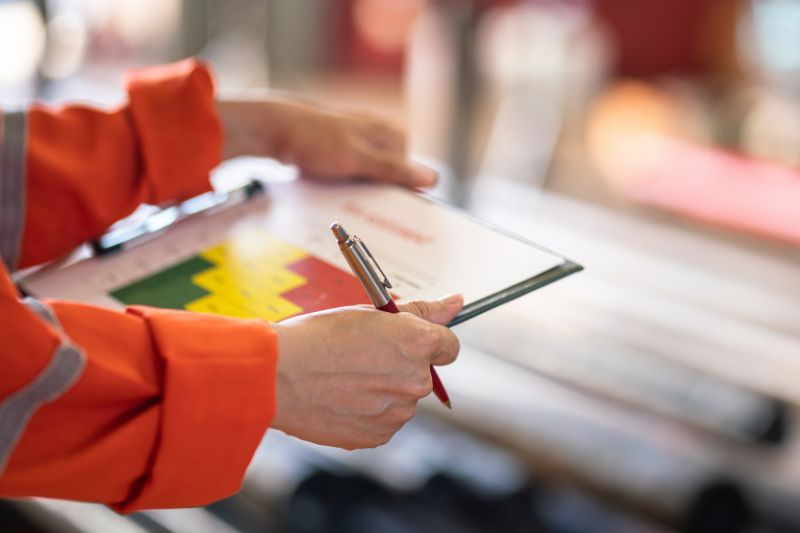
A fire risk assessment is a detailed, systematic evaluation of your physical premises and the activities carried out within them. The goal is to identify potential fire hazards, determine who might be in danger, and establish what protective measures need to be implemented to keep people safe.
Who is the “Responsible Person”?
UK fire safety law relies on the concept of the “Responsible Person.” If you are an employer, the owner, the landlord, or the occupier of a business premises, you are likely the Responsible Person.
It is your legal duty to ensure a fire risk assessment is carried out and that all necessary fire safety precautions are implemented. While you can hire a competent external assessor to conduct the physical check, the legal accountability always remains with the Responsible Person.
Crucial Legislative Update (October 2023): > Previously, only businesses with five or more employees had to keep a written record of their fire risk assessment. However, following Section 156 of the Building Safety Act 2022 (which came into force on 1st October 2023), all businesses must now record their fire risk assessment and fire safety arrangements in writing, regardless of how many people they employ.
The Fire Triangle: Understanding Fire Hazards
Before conducting an assessment, you must understand how fires start. A fire requires three elements to ignite and sustain itself, known as the “Fire Triangle.” Your assessment must look for all three:
| Element | Description | Common Workplace Examples |
| Source of Ignition | The heat required to start the fire. | Faulty electrical equipment, naked flames, space heaters, hot works (welding). |
| Source of Fuel | What the fire burns to keep going. | Paper, cardboard packaging, flammable chemicals, textiles, waste bins. |
| Source of Oxygen | The air the fire needs to breathe. | Natural airflow from open doors/windows, air conditioning units, oxidising chemicals. |
How to Do a Fire Risk Assessment (The 5-Step Guide)
The UK government and the Health and Safety Executive (HSE) outline a strict 5-step process for conducting a compliant fire risk assessment.
Step 1: Identify the Fire Hazards
Walk around your premises specifically looking for the elements of the fire triangle.
- Where are your sources of ignition?
- Are flammable materials stored too close to heat sources?
- Are electrical sockets overloaded or cables frayed?
Step 2: Identify People at Risk
Consider everyone who might be in or around the building if a fire breaks out.
- Staff and Contractors: Including night shift workers or lone workers.
- Public and Visitors: Customers, clients, or delivery drivers who may be unfamiliar with your layout.
- Vulnerable Persons: You must create a Personal Emergency Evacuation Plan (PEEP) for anyone who might struggle to evacuate quickly, such as wheelchair users, the elderly, or visually/hearing impaired individuals.
Step 3: Evaluate, Remove, or Reduce the Risks
Assess the likelihood of a fire starting and the potential consequences. Your priority is to remove hazards entirely (e.g., safely disposing of accumulated waste). If you cannot remove a hazard, you must reduce the risk to an acceptable level. This involves installing and maintaining Fire Safety Equipment, such as:
- Fire detection and warning systems (smoke alarms).
- Emergency lighting to illuminate escape routes.
- Fire doors to compartmentalise the building and slow the spread of smoke.
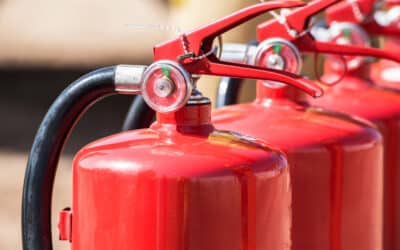
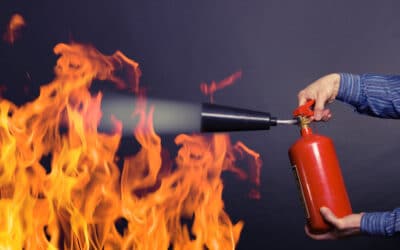
- Appropriate Fire Extinguishers located at strategic points.
Step 4: Record Findings, Prepare an Emergency Plan, and Train Staff
You must document all identified hazards and the actions you have taken to mitigate them. Next, draft a clear emergency evacuation plan detailing escape routes, assembly points, and how the fire brigade will be called.
Crucially, your staff must know what to do. You are legally required to provide comprehensive Fire Safety Training to all employees, and appoint designated “Fire Wardens” or “Fire Marshals” to lead evacuations.
Step 5: Review and Update Your Assessment Regularly
A fire risk assessment is a living document, not a piece of paper you file away and forget. While there is no strict legal timeframe, industry best practice dictates that you should review your assessment:
- Annually.
- Following any significant changes to the building layout.
- If you drastically change your work processes or store new hazardous materials.
- Following a “near miss” or an actual fire incident.
What Happens If You Ignore Fire Safety?
Local Fire and Rescue Authorities conduct random, unannounced inspections of commercial premises. If they find that you have an inadequate fire risk assessment or lack basic safety measures, they can issue:
- Alteration or Enforcement Notices: Forcing you to make rapid, often expensive, improvements.
- Prohibition Notices: Immediately shutting down your business until the premises are made safe.
- Prosecution: Severe breaches can result in unlimited corporate fines and custodial prison sentences for the Responsible Person.
How Safety Services Direct Can Help
If your premises are small and simple, you may be able to conduct the assessment yourself. However, for larger offices, factories, or multi-use buildings, you must ensure the person carrying out the assessment is suitably “competent.”
If you lack the internal expertise, Safety Services Direct is here to help. We supply a comprehensive range of Fire Safety Products (including signage and extinguishers), a professional Fire Safety Log Book , and expert consultancy via our Safety Advisory Service (SAS) to ensure your premises are fully compliant with UK law.
Safeguarding Your Business and Your People
In summary, carrying out a thorough and legally compliant fire risk assessment is one of the most critical responsibilities of any business owner. It goes far beyond simply satisfying the law; it is about actively preserving the lives of your employees, customers, and the future of your business itself. By diligently following the 5-step process, keeping your documentation up to date, and investing in the correct training and equipment, you can effectively eliminate fire risks before they ever have the chance to ignite.