
Health and safety advisors play a quiet, critical role in keeping people safe at work. They work behind the scenes, reviewing processes, challenging decisions, guiding leaders and preventing incidents left, right and centre. When they’re doing their job well, you won’t really notice – which is precisely the point.
Whether you’re considering a career in health and safety, looking to outsource to professional H&S advisors, or are newly responsible for managing risk within your organisation, understanding what a health and safety advisor does and why their role matters is essential. Let’s dive in.
What Is a Health and Safety Advisor?
A health and safety advisor is, quite simply, responsible for helping organisations identify, manage and reduce workplace risks. As the name suggests, their role is advisory rather than enforcement-led, but their influence is big (and very important).
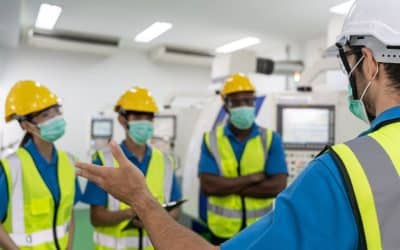
This competent professional works with employers, managers and workers to ensure that:
- Legal duties are understood and met
- Risks are identified and controlled
- Safe systems of work are developed and followed
- Incidents are prevented, not just investigated
In practice, health and safety advisors help bridge the gap between legislation and day-to-day operations, translating complex requirements into practical, workable solutions.
What Does a Health and Safety Advisor Actually Do?
The role varies depending on the industry and organisation, but typically includes a mix of strategic and hands-on responsibilities.
This can involve:
- Carrying out risk assessments and audits
- Reviewing policies, procedures and method statements
- Advising on legal compliance and best practice
- Supporting accident and incident investigations
- Delivering or coordinating training
- Providing practical advice to managers and site teams
- Monitoring standards and recommending improvements
Crucially, good advisors don’t just point out what’s wrong. They work collaboratively to help organisations understand why something matters and how it can realistically be improved.
Why Health and Safety Advisors Are So Important
UK health and safety legislation places clear duties on employers, but compliance on paper doesn’t automatically translate into a safe workplace. Policies can exist, procedures can be written, and training can be delivered, but gaps can still emerge in day-to-day practice. That is where proper health and safety advice makes a real, measurable difference.
A skilled health and safety advisor works with organisations to prevent injuries, ill health and expensive incidents. By identifying operational weaknesses early and strengthening control measures, they help reduce the risk of enforcement action, fines and reputational damage. Their involvement also improves consistency across sites and teams, ensuring standards are applied reliably rather than unevenly.
Beyond processes and paperwork, advisors build confidence among managers and workers. They provide clarity where there is uncertainty and reassurance where decisions carry weight. Over time, this consistent, informed guidance can strengthen your overall safety culture – embedding “safe thinking” into everyday operations rather than treating it as a separate compliance exercise.
Perhaps most importantly, effective advisors help organisations shift from reacting to incidents to preventing them. By spotting emerging risks and addressing them early, they stop minor issues from escalating into serious problems.
Health and Safety Advisor Qualifications
There’s no single route into health and safety, but competence is key. Advisors are expected to have a solid understanding of legislation, risk management and human behaviour, backed up by recognised qualifications and experience.
Common health and safety qualifications for these professionals include:
- NEBOSH General Certificate (often the entry point)
- NEBOSH National Diploma (for more senior advisory roles)
- NVQs in Occupational Health and Safety
- IOSH Managing Safely (often supporting roles)
Many advisors also work towards or hold professional membership with bodies such as IOSH (Institution of Occupational Safety and Health), which demonstrates ongoing competence and commitment to professional standards.
How to Become a Health and Safety Advisor
Going from being an office administrator to an effective health and safety officer isn’t possible – it’s more of a gradual process rather than a single step.
A common pathway includes:
- Gaining a foundation qualification such as NEBOSH General Certificate
- Building practical experience within a workplace or industry
- Developing confidence in advising managers and teams
- Progressing to higher-level qualifications or specialist areas
- Continuing professional development to stay current
Strong communication skills, professional judgement and the ability to influence others are just as important as technical knowledge. The best advisors are approachable, credible and pragmatic – not rule-focused for the sake of it.

In-House vs External Health and Safety Advisors
Some organisations choose to employ health and safety advisors in-house to make use of this expertise within their management structure. For larger businesses with complex operations, this can provide useful day-to-day oversight and immediate support.
However, not every organisation requires or can justify a full-time internal advisor. In many cases, outsourced health and safety support provides a more flexible, proportionate solution.
External advisors are particularly valuable when there’s a lack of in-house expertise, when independent, objective advice is needed, or when specific projects, audits, or periods of growth could use a little extra guidance.
They also provide added capacity and compliance during times of change, investigation or increased regulatory scrutiny.
Professional Support Beyond One-Off Advice
Effective health and safety management isn’t about one-off fixes. It’s about ongoing support, review and improvement as businesses evolve.
That’s why many organisations choose to work with professional advisors who can provide structured, tailored support. Outsourcing gives businesses access to experienced professionals with broad industry exposure and up-to-date legal knowledge, without the fixed cost of permanent employment.
Because external advisors work across multiple sectors and environments, they can bring practical insight shaped by real-world experience, helping them spot risks and efficiencies that internal teams would likely overlook.
Safety Services Direct has over 20 years of experience supporting organisations across a wide range of industries, offering practical health and safety advice that fits the reality of how people work. Our advisory support is designed to complement internal teams, strengthen compliance and help businesses manage risk confidently, not fearfully.
Alongside advisory support, we also provide a broad range of health and safety consultancy services and training courses, allowing organisations to access the right level of expertise when and where it’s needed.
If your organisation would benefit from experienced, practical health and safety advice, Safety Services Direct can provide tailored outsourced support designed around your risks, your people and your operational reality. Just give us a call at 0121 348 7828 and our friendly team will help you determine the right course of action.