


Despite the use, supply, and importation of the mineral being completely banned in the UK in 1999, asbestos remains the single greatest cause of work-related deaths in the country. According to the Health and Safety Executive (HSE), past exposure to asbestos is responsible for approximately 5,000 fatalities in Great Britain every single year.
For tradespeople, construction workers, and property managers, understanding the sheer physical devastation caused by this hidden mineral is vital. The danger of asbestos lies not in immediate pain or trauma, but in its microscopic size and its terrifying ability to destroy the human respiratory system over decades.
In this comprehensive UK guide, we break down the long-term health effects of asbestos exposure, the fatal diseases it causes, the dangers of secondary exposure, the crucial “latency period,” and the strict legal steps employers must take to protect their workforce today.
The 3 Types of Asbestos and Their Danger Levels
Asbestos is a naturally occurring silicate mineral. While all forms of asbestos are highly dangerous and classified as Category 1 human carcinogens, they are structurally different. Historically, the UK construction industry relied on three main types:
- Crocidolite (Blue Asbestos): Widely considered the most lethal form. The fibres are incredibly thin, brittle, and needle-like, meaning they easily penetrate deep into lung tissue. It was commonly used in steam engine insulation and spray-on fireproofing.
- Amosite (Brown Asbestos): Characterised by harsh, spiky fibres. It was heavily used in Asbestos Insulating Board (AIB), ceiling tiles, and thermal pipe lagging.
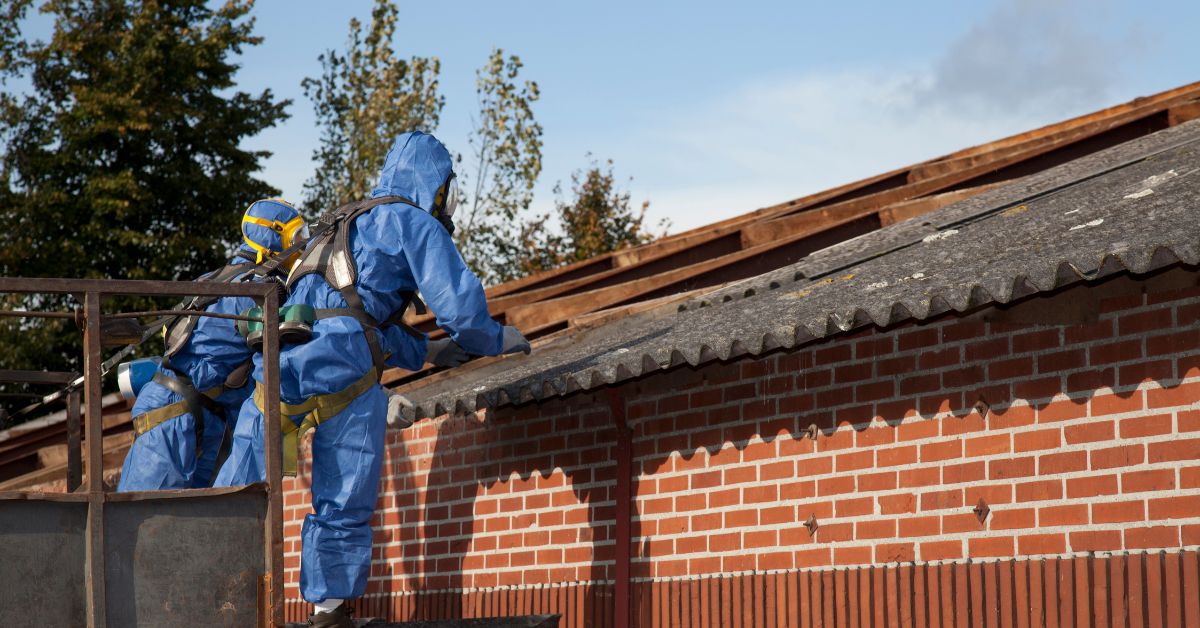
- Chrysotile (White Asbestos): The most commonly used form of asbestos, accounting for around 90% of all ACMs in the UK. It has curlier, softer fibres and was mixed into cement roofs, Artex decorative ceilings, and vinyl floor tiles.
The Pathogenesis: How Asbestos Destroys the Body
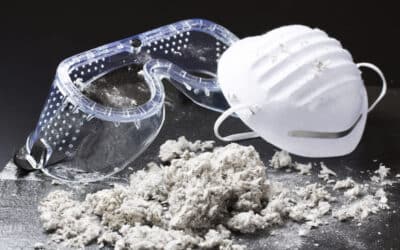
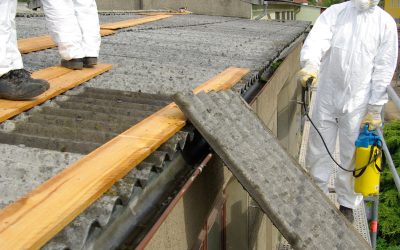
When Asbestos-Containing Materials (ACMs) are disturbed, such as by drilling into an old ceiling, ripping up floor tiles, or smashing a corrugated roof, they release millions of microscopic fibres into the air.
These fibres are virtually invisible and completely odourless. When inhaled, they bypass the body’s natural respiratory defences (like the hairs in your nose and mucus in your throat) and travel deep into the lower lungs and the pleural lining. Because the fibres are indestructible, they become permanently embedded in the tissue. The body’s immune system attacks them but cannot break them down. This leads to decades of chronic inflammation, internal scarring, and eventual genetic cellular mutation.
The Asbestos “Latency Period” Explained
One of the most highly searched questions regarding asbestos is: “How long does it take for asbestos symptoms to show?”
The terrifying reality of asbestos is the latency period. If a carpenter inhales a cloud of asbestos dust today, they will not wake up sick tomorrow. It takes a significant amount of time for the embedded fibres to cause enough cellular damage to trigger a respiratory disease.
Medical experts at the HSE and the NHS note that the latency period for asbestos-related diseases is typically between 15 and 60 years after the initial exposure. This means that the 5,000 tradespeople dying in the UK this year were likely exposed to the dust during the 1970s, 80s, and 90s.
The 4 Fatal Asbestos-Related Diseases
Prolonged exposure to asbestos dust is directly linked to four devastating, life-limiting respiratory diseases.
| Disease | Description | Prognosis |
| 1. Mesothelioma | A rare, aggressive cancer that develops in the lining of the lungs (the pleura) or the lower digestive tract. It is almost exclusively caused by asbestos exposure. | Currently incurable and rapidly fatal. By the time symptoms appear, the cancer is usually advanced. |
| 2. Asbestos-Related Lung Cancer | Malignant tumours that develop inside the lung itself (rather than the lining). Visually indistinguishable from lung cancer caused by smoking. | Highly fatal, requiring severe interventions like chemotherapy, radiotherapy, or surgical removal of the lung. |
| 3. Asbestosis | A severe, chronic, and progressive lung condition. Decades of internal inflammation cause extensive scarring (fibrosis), making the lungs stiff and unable to expand. | Incurable. Sufferers experience severe shortness of breath and ultimately rely on permanent oxygen tanks to survive. |
| 4. Pleural Thickening | A non-malignant condition where the lining of the lungs thickens, swells, and calcifies due to heavy asbestos scarring. | Chronic and disabling. It squeezes the lungs, making breathing incredibly painful and difficult. |
(Note: For specialist medical advice and support regarding these diagnoses, always consult the NHS guidelines or reach out to Macmillan Cancer Support).
The Synergistic Effect: Asbestos and Smoking
A critical, often misunderstood factor in asbestos-related lung cancer is the “synergistic effect” with tobacco smoking.
If an individual is exposed to asbestos, their risk of developing lung cancer increases. If an individual smokes, their risk also increases. However, if an individual smokes and is exposed to asbestos fibres, the risks do not just add up, they multiply. A smoker exposed to asbestos is approximately 50 to 90 times more likely to develop lung cancer than the general public.
The Tragedy of Secondary (Take-Home) Exposure
Historically, asbestos did not just kill the workers handling it; it devastated their families. Before the dangers were fully understood, tradespeople would return home covered in asbestos dust. Their spouses would inhale the deadly fibres while shaking out and washing their overalls, and their children would inhale it while hugging them. Today, a significant percentage of female Mesothelioma patients in the UK contracted the disease entirely through this secondary “take-home” exposure.
Government Compensation and Financial Support
Because the health effects are so severe and strictly work-related, the UK government has established financial safety nets for victims. If you have been diagnosed with an asbestos-related disease, you may be eligible for the Industrial Injuries Disablement Benefit (IIDB). Furthermore, if your former employer has gone out of business, you can still claim compensation through the government’s Diffuse Mesothelioma Payment Scheme (DMPS).
UK Law: Preventing Future Exposure
Because the health effects are irreversible, the Control of Asbestos Regulations 2012 (CAR 2012) place incredibly strict legal duties on UK employers.
If your workers are liable to disturb the fabric of a commercial building built before the year 2000, employers have a strict legal “Duty to Manage” the risk. This involves locating potential ACMs, maintaining an Asbestos Register, and ensuring that no work commences until a comprehensive risk assessment has confirmed the area is safe.
How Safety Services Direct Can Help
Prevention is the only cure for asbestos-related diseases. Ensuring your workforce is highly educated and adequately protected is not just a moral duty, it is a strict legal requirement.
UKATA Asbestos Awareness Training is the industry gold standard. Our fully accredited, online UKATA course teaches your workforce how to identify highly suspicious materials, navigate the 2012 Regulations, and follow emergency procedures. We also provide a highly engaging RoSPA Approved Asbestos Awareness E-Learning Course for wider staff compliance.
If your business conducts legal, non-licensed work with low-risk ACMs, providing your staff with the correct face-fitted Respiratory Protection and Dust Masks (FFP3) is an absolute necessity under COSHH.
Finally, if you need help auditing your workplace hazards, reviewing an Asbestos Register, or creating legally compliant Risk and Method Statements (RAMS), our Health and Safety Advisory Service (SAS) consultants are here to act as your dedicated, outsourced competent safety partner.
Conclusion: Respect the Dust
In summary, the long-term health effects of asbestos exposure are brutal, incurable, and almost entirely preventable. Conditions like Mesothelioma and Asbestosis lie dormant in the body for decades before ruthlessly destroying a worker’s respiratory system. As an employer or a tradesperson, you cannot afford to take risks. By enforcing strict safety protocols, investing in accredited online training, understanding the devastating multiplier effect of smoking, and treating every pre-2000 building with extreme caution, we can ensure that the deadly legacy of asbestos finally comes to an end.