

Falls from height remain one of the leading causes of workplace fatalities and major injuries in the UK. To combat this, the Work at Height Regulations 2005 (WAHR) were introduced to ensure that all activities performed at height are properly planned, supervised, and carried out by competent individuals.
If you are an employer, facilities manager, or building owner who controls work at height, you are legally considered a ‘duty holder’. Ignorance of the law is not a defence, so it is vital to understand your legal responsibilities. Here is a simple, comprehensive guide to staying compliant and keeping your workforce safe.
What Exactly Counts as ‘Work at Height’?
A common misconception is that work at height only applies to those scaling scaffolding or working on multi-storey roofs. In the eyes of the Health and Safety Executive (HSE), work at height is defined as work in any place where, if precautions were not taken, a person could fall a distance liable to cause personal injury.
This means you are governed by WAHR if your staff are:
- Working on a ladder or a flat roof.
- Working near fragile materials (such as asbestos cement roofing or roof lights).
- Working at ground level adjacent to an open trench, cellar door, or excavation site.
Note: Trips and slips on the same level, or walking up and down a permanent staircase, do not fall under these regulations.
The Work at Height Hierarchy of Control
The cornerstone of the Work at Height Regulations is the ‘Hierarchy of Control’. This is a step-by-step legal framework that you must follow before authorising any work at height. You must assess the risks and move down the hierarchy only if the step above is not reasonably practicable.
1. Avoid Work at Height
Your first duty is to question if the work at height needs to happen at all. Can the task be redesigned or completed from the ground?
- Examples: Using extendable tools to clean windows, lowering lighting fixtures to ground level for maintenance, or assembling structures on the ground before lifting them into place with machinery.
2. Prevent Falls
If working at height cannot be avoided, you must use the right equipment to prevent a fall from occurring. The law requires you to prioritise collective protection (measures that protect everyone) over personal protection (measures that only protect the user).
| Protection Type | Definition & Examples |
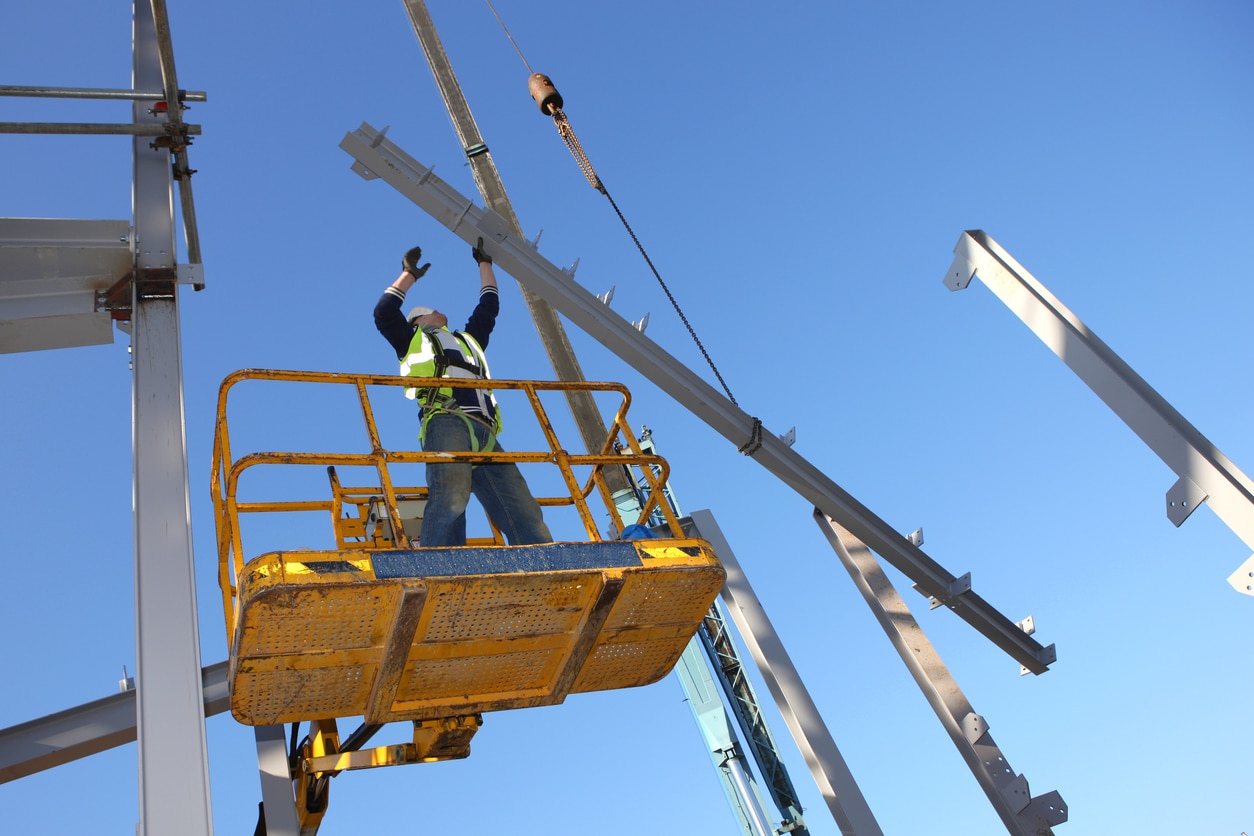
| Collective Prevention | Equipment that requires no action by the worker to be effective. Examples include guard rails, mobile elevating work platforms (MEWPs), and tower scaffolds. |
| Personal Prevention | Equipment that prevents the user from reaching a fall edge. Examples include work restraint systems and safety lanyards that are adjusted to restrict movement. |
3. Minimise the Distance and Consequences of a Fall
If the risk of a fall cannot be completely eliminated, you must implement measures that will minimise the distance a worker could fall, and the severity of the potential injury. Again, collective protection must be prioritised.
| Protection Type | Definition & Examples |
| Collective Mitigation | Systems placed below the work area to catch a falling person safely. Examples include safety nets and soft landing systems (airbags). |
| Personal Mitigation | Equipment worn by the individual to arrest a fall. The most common example is a full-body industrial fall arrest harness. |
Ensuring Worker Competence and Training
One of the strictest requirements under the Work at Height Regulations 2005 is that anyone working at height must be ‘competent’. This means they must have the right combination of skills, knowledge, and experience to perform the task safely. If a worker is training, they must be supervised by someone who is competent.
You cannot assume a worker is competent simply because they have been doing the job for a long time. Providing your staff with a recognised working at heights certificate is the most robust and auditable way to evidence this competency. Formal training ensures your team understands how to select the right equipment, inspect it for defects, and understand the limits of their own capabilities.
Equipment Inspection and Maintenance
Under WAHR, providing the right equipment is only half the battle; it must also be rigorously maintained. Employers must ensure that:
- Pre-use checks: Workers visually inspect ladders, harnesses, and scaffolds before every single use.
- Formal inspections: Equipment exposed to conditions causing deterioration is inspected at regular intervals by a competent person.
- Record keeping: Formal inspection records are legally required to be kept and made available to health and safety inspectors upon request.
Do Not Forget the Rescue Plan
A critical, yet frequently overlooked, element of WAHR is emergency planning. If a worker falls and is suspended in a fall arrest harness, you cannot simply rely on calling the fire brigade.
Suspension trauma (blood pooling in the legs) can become fatal in a matter of minutes. Employers are legally obligated to have a specific, documented rescue plan in place before work commences, ensuring that any suspended worker can be rescued safely and promptly.
Summarising Why Compliance is Key
Complying with the Work at Height Regulations 2005 protects your business from severe legal and financial repercussions, but more importantly, it ensures your staff go home safely at the end of the day. By consistently applying the hierarchy of control and investing in proper training, you can significantly reduce the risks associated with working at height.