

Every year in the UK, workplace hazards result in thousands of injuries and massive financial losses for businesses. According to the latest Health and Safety Executive (HSE) statistics, millions of working days are lost annually due to work-related ill health and non-fatal workplace injuries.
Under the Health and Safety at Work etc. Act 1974, employers have a strict legal and moral duty to protect the health, safety, and welfare of their employees. Identifying these hazards is only the first crucial step in compliance.
Here is our comprehensive guide to the top 10 workplace safety hazards in 2026, the regulatory framework you must follow, and the actionable steps your business can take to mitigate risks.
The Foundation of Prevention: The Hierarchy of Hazard Control
Before tackling specific hazards, it is vital to understand how the HSE expects you to manage them. UK law requires employers to follow the Hierarchy of Risk Control. When you identify a hazard, you must attempt to mitigate it by working from the top of this list downwards:
- Elimination: Can the hazard be physically removed entirely? (e.g., redesigning a task to avoid working at height).
- Substitution: Can you replace the hazard with something safer? (e.g., swapping a toxic cleaning chemical for a non-hazardous one).
- Engineering Controls: Can you isolate people from the hazard? (e.g., installing physical guards on machinery or sound-dampening enclosures).
- Administrative Controls: Can you change the way people work? (e.g., limiting exposure time, implementing strict safe systems of work, or rotating shifts).
- Personal Protective Equipment (PPE): This is the absolute last resort. If the risk remains, you must provide appropriate PPE (e.g. hard hats, ear defenders, or respiratory masks).
The Top 10 Workplace Safety Hazards (And How to Address Them)
1. Slips, Trips, and Falls on the Same Level
Consistently ranking as the most common cause of non-fatal workplace injuries in the UK, slips and trips account for roughly a third of all major injuries reported under RIDDOR.
- The Risks: Wet floors, uneven surfaces, trailing cables, and poor lighting.
- How to Mitigate: Implement a strict “clean as you go” housekeeping policy. Use anti-slip flooring in high-risk areas (like kitchens or factory entrances), secure all cables, and ensure walkways are well-lit and free of obstructions.
2. Manual Handling and Ergonomic Injuries
Incorrectly lifting or moving heavy loads leads to severe Musculoskeletal Disorders (MSDs), including back injuries and joint pain, which are the leading cause of occupational ill health.
- The Risks: Lifting heavy, awkward, or unpredictable loads without mechanical assistance, or repetitive strain from poor workstation ergonomics.
- How to Mitigate: Follow the TILE principle (Task, Individual, Load, Environment) before any lift. Provide mechanical lifting aids (like pump trucks or hoists) and ensure all relevant staff have completed mandatory Manual Handling Training.
3. Working at Height
Falls from a height remain the leading cause of fatal workplace accidents in the UK construction and maintenance sectors.
- The Risks: Falling from ladders, fragile roofs, or unprotected edges.
- How to Mitigate: Comply strictly with the Work at Height Regulations 2005. Avoid working at height if possible. If unavoidable, use equipment that prevents falls (like edge protection), or equipment that minimises the distance of a fall (like safety nets). Staff must complete Working at Height Training.
4. Hazardous Substances (COSHH)
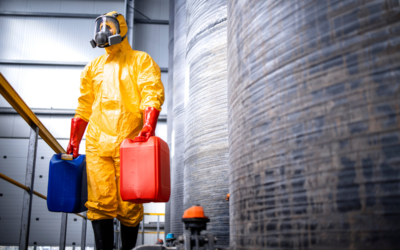
Exposure to dangerous chemicals, fumes, dust, or biological agents can cause long-term, debilitating respiratory diseases such as occupational asthma or silicosis.
- The Risks: Exposure to asbestos, silica dust on building sites, or harsh industrial solvents.
- How to Mitigate: Conduct strict COSHH Assessments (Control of Substances Hazardous to Health). Substitute dangerous chemicals for safer alternatives where possible, ensure adequate Local Exhaust Ventilation (LEV), and provide appropriate Respiratory Protective Equipment (RPE).
5. Electrical Safety Hazards
Electricity is a silent, immediate danger. Faulty wiring or poorly maintained equipment can lead to fatal shocks or devastating workplace fires.
- The Risks: Overloaded sockets, frayed cables, and exposure to live parts in damp environments.
- How to Mitigate: Under the Electricity at Work Regulations 1989, electrical systems must be maintained safely. Implement regular visual inspections and ensure Portable Appliance Testing (PAT) is carried out by a competent person.
6. Fire Safety and Flammable Materials
A workplace fire can destroy a business and cost lives in a matter of minutes. Poorly managed fire risks are heavily penalised by local fire authorities.
- The Risks: Blocked fire exits, accumulated combustible waste, and improper storage of highly flammable liquids.
- How to Mitigate: You are legally required to conduct and maintain a comprehensive Fire Risk Assessment. Ensure fire extinguishers are serviced annually, fire alarms are tested weekly, and staff complete Fire Safety Training.
7. Moving Machinery and Equipment Guarding
In the manufacturing, agriculture, and construction sectors, moving machinery presents an extreme hazard, leading to crush injuries, amputations, or entanglement.
- The Risks: Loose clothing catching in rotating parts, or staff bypassing safety guards to clear blockages.
- How to Mitigate: Comply with PUWER (Provision and Use of Work Equipment Regulations 1998). Ensure proper machine guards are permanently installed, and enforce strict Lock-Out/Tag-Out (LOTO) procedures during routine maintenance.
8. Workplace Stress and Mental Health
Mental health is now rightfully recognised as a primary workplace hazard. Work-related stress, depression, or anxiety accounts for the majority of workdays lost to ill health across all sectors.
- The Risks: Unmanageable workloads, lack of managerial support, tight deadlines, and workplace bullying.
- How to Mitigate: Employers should use the HSE’s Management Standards to assess stress. Conduct stress risk assessments, promote an open dialogue regarding mental health, and provide access to Employee Assistance Programmes (EAPs).
9. Workplace Transport and Pedestrian Collisions
In warehouses, factories, and construction sites, the interaction between pedestrians and moving vehicles (such as forklift trucks or HGVs) is a high-risk scenario that frequently results in serious crush injuries.
- The Risks: Reversing vehicles striking pedestrians, or unsecured loads falling from forklifts.
- How to Mitigate: Design your workplace to physically separate pedestrians from vehicles using barriers and designated walkways. Enforce strict site speed limits, install reversing alarms, and require high-visibility clothing in operational areas.
10. Lone Working Vulnerabilities
Staff who work by themselves without close supervision; such as security guards, district nurses, or hybrid home workers, face heightened risks if they suffer an accident or a medical emergency.
- The Risks: Inability to call for help following a sudden illness or injury, or exposure to physical violence/aggression from the public.
- How to Mitigate: Implement robust lone working policies. Provide lone-worker alarm systems, GPS tracking (where appropriate and legally compliant), and establish strict communication check-in procedures.
What Happens If You Ignore Workplace Hazards?
Failing to identify and mitigate these hazards carries severe consequences for UK businesses.
- RIDDOR Reporting: If a workplace hazard results in a fatality, specified major injury, or an injury that incapacitates a worker for more than seven consecutive days, you are legally obligated to report it to the HSE under RIDDOR (Reporting of Injuries, Diseases and Dangerous Occurrences Regulations 2013).
- Fee for Intervention (FFI): If an HSE inspector visits your premises and finds a material breach of health and safety law, you will be charged an hourly rate (currently over £160 per hour) for the time it takes them to identify the breach and help you put it right.
- Criminal Prosecution: Severe breaches can result in unlimited fines for the company, and even personal prosecution or imprisonment for company directors.
How Our Safety Advisory Service (SAS) Can Help
Under UK law (The Management of Health and Safety at Work Regulations 1999), every business must appoint a “Competent Person” to assist with health and safety compliance.
If you don’t have the internal expertise, time, or budget to hire a full-time compliance manager, our Safety Advisory Service (SAS) is the perfect solution.
Acting as your dedicated, outsourced competent person, Safety Services Direct will:
- Conduct thorough, unbiased workplace audits.
- Draft bespoke, legally compliant risk assessments for your specific hazards.
- Provide ongoing advice to protect your workforce, ensure HSE compliance, and shield your business from legal liability.
In summary, identifying and mitigating workplace hazards is far more than a simple box-ticking exercise; it is a fundamental legal and moral obligation to your workforce. By proactively addressing these top 10 risks; whether through improved training, better equipment, or expert consultancy, you not only protect your staff from harm but also safeguard your business from costly HSE fines and reputational damage. Health and safety is a continuous journey, so stay vigilant, keep your risk assessments up to date, and never hesitate to seek competent advice to ensure your business remains fully compliant and, above all, safe.